
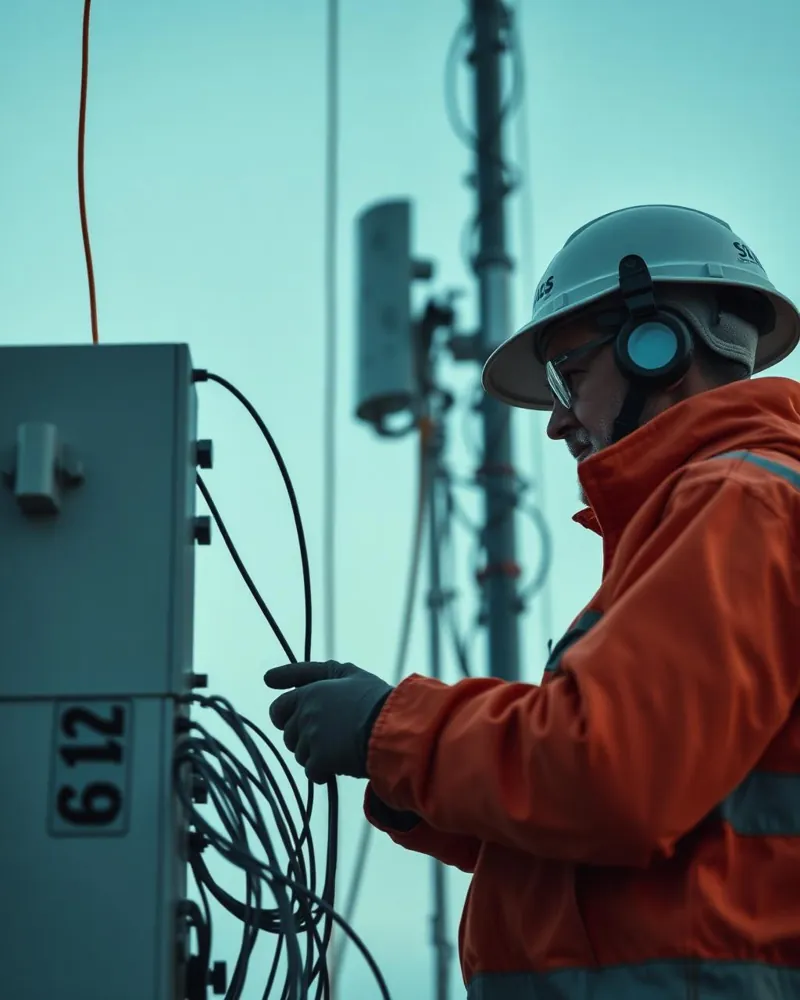
Telecommunications technician performing network equipment maintenance

Engineering and technology

Telecommunications

Engineering and technology for your industry’s challenges.

Scale, availability, and speed are essential in telecommunications operations. We structure teams and projects to evolve systems, strengthen technological environments, and expand companies' delivery capacity.

Industry context

Industry challenges

  1. Network and service availability

    Telecommunications networks and services depend on interconnected elements and changing demand. Investigating unavailability requires linking events, configuration and system behavior. Useful monitoring needs to preserve context and distinguish causes from effects. Technical planning should consider dependencies and responsibilities when guiding maintenance, development and service continuity, making the relationship between network conditions and customer-facing applications visible to the teams involved.

  2. Operating platform integration

    Customer service, operating and network management platforms need to share consistent information. Teams must understand identifiers, states and integration rules. Without that foundation, inconsistencies can spread across systems and make incident resolution harder. Interface analysis and testing help organise application development, preserving the connection between data and operating processes while making dependencies and responsibilities clear throughout implementation and support.

  3. Capacity, automation and security

    Expanding services requires an assessment of infrastructure capacity, configuration and access protection. Automating work without understanding exceptions may simply accelerate inconsistencies. Software engineering, data analysis and cybersecurity need to work together to define verifiable rules. Development should consider observability and failure handling, with decisions aligned to actual operating needs rather than treating automation alone as evidence of dependable service improvement.

Engineering and technology for your operations

LUZA Engineering Experts

LUZA Engineering Experts brings together capabilities in process analysis, technical management and operating reliability. The approach starts with an understanding of requirements and interfaces between activities, systems and teams. Specialists can join the client organization, work within a dedicated team or contribute to a complete project. Technical analysis, documentation and verification criteria help connect design decisions with operating conditions. Scope and responsibilities are defined according to the need, rather than assuming that the same configuration will suit every environment or every stage of development.

Explore this solution

LUZA IT Experts

LUZA IT Experts connects capabilities in software, platform integration, data, infrastructure and network security. Solution definition considers existing applications, information quality, access and infrastructure dependencies. Development, data and quality teams work from clear requirements and acceptance criteria aligned with intended use. The integration of engineering and technology allows processes and systems to be treated as parts of the same operation. Tool selection follows the technical context and project objective, with attention to maintenance, support and the continued development of what is delivered.

Explore this solution

How we structure delivery

To structure delivery, the initial discussion connects the technical problem with affected processes, existing systems and the teams involved. Requirements and constraints need to be understood before specialists or tools are selected.

This analysis helps define activities, interfaces, acceptance criteria and the information needed to monitor execution. Planning considers integration with client operations and the responsibilities of each participant, keeping scope connected to actual working conditions rather than relying on assumptions about the environment.

Execution can combine embedded specialists, dedicated teams and end-to-end projects according to the agreed scope. Technical monitoring maintains visibility over decisions, dependencies and changing needs. Quality reviews and validation evidence help verify delivery alignment. By organising documentation, criteria and responsibilities, teams also preserve the context needed for maintenance, continuity and future development. This structure supports discussion of adjustments using verifiable information, without promising results that depend on specific client conditions or decisions outside the agreed technical scope.

  1. Understanding the context

    We analyze the characteristics of the environment, project, and operation before defining the necessary competencies.

  2. Adherent teams

    We select specialists considering technical experience, adaptability, and familiarity with the sector.

  3. Flexible models

    We operate with integrated professionals, dedicated teams, or complete projects, as needed.

  4. Continuous evolution

    We monitor the delivery to maintain adherence, identify risks, and adjust the structure when necessary.

Find the right capabilities for your industry

Talk to our specialists about the challenges, competencies, and the most suitable delivery model for your market.